Cloud adoption is an attractive proposition to increase IT agility and contain cost. A careful analysis has to be conducted to determine which workloads are best suitable to be migrated to cloud. A recommended approach is to migrate the workloads progressively rather than a big bang approach. Move application by application in each iteration and tweaking the migration process after each cycle based on validated learnings. However, this is easier said than done because in any enterprise IT portfolio, most business critical and support applications have direct and indirect dependencies to other applications, systems, shared services, or common data stores.
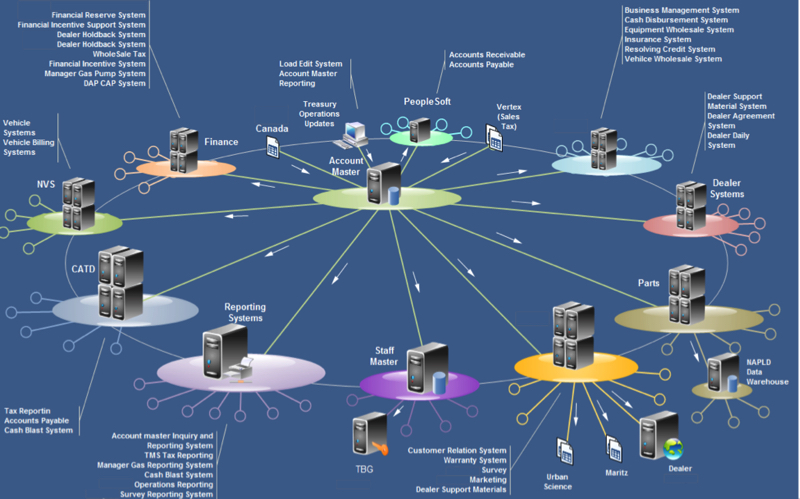
Consider the above view I drew in one of my past strategic engagements to modernize IT portfolio of a major automotive client. I drew this fishbowl perspective view from a standpoint of one of the core systems. Its apparent the complexity of integration of this system to others. One cannot simply yank it out from this ecosystem and host it on the cloud. Careful consideration is warranted to evaluate the impact on aspects related to data, security, network, performance, session handling, and service management.
Recognizing this, while designing and engineering the automated cloud migration platform, we placed great emphasis to have platform provide an integrated view to the migrating teams.
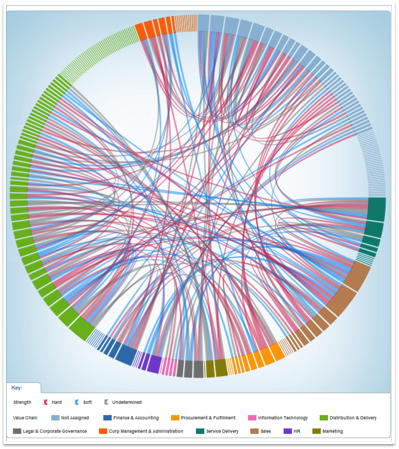
For each application of the portfolio in the scope, we captured the incoming and outgoing dependencies. We enhanced the depiction with color coded workloads to represent various business value streams which then allows the teams to customize the view based on the business processes.
We further made it interactive so that users can drill down to particular connection.
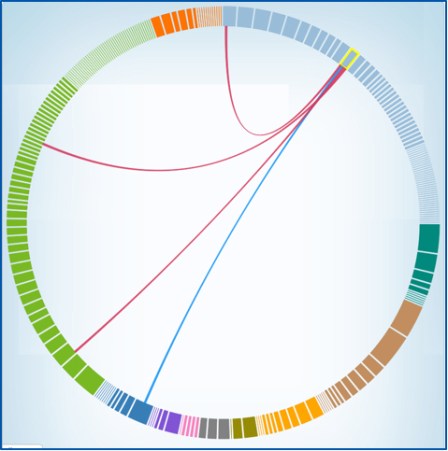
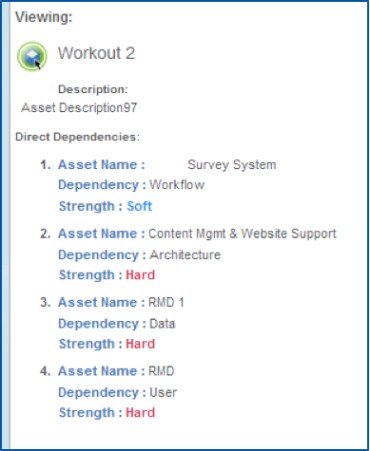
The properties of each dependency can also be configured and read later.
 Mahesh Alampalli